
You hop onto a northeast-bound train at London’s Liverpool Street Station. As the city fades out of view, you find yourself surrounded by woodlands and open fields. About an hour into your journey, you notice the landscape turning distinctly coastal. You glimpse waterways and an estuary so large it could pass for the sea itself, as the train weaves its way through vast marshlands along England’s eastern edge. Another 45 minutes later, you reach your stop: the beautiful historical city of Norwich.
Today, Norwich — with its picturesque medieval streets and Norman castle — describes itself as ‘a fine city’, a moniker bolstered by the fact that it was recently named the best place to live in the UK. It is also known as ‘the City of Stories’, and this is, in fact, part of the reason why you are here: in 2012, Norwich became England’s first UNESCO City of Literature, in recognition of not only its centuries-old literary heritage but also its bustling present-day writing culture.
You board a double-decker bus to reach your destination: the University of East Anglia (UEA), the beating heart of Norwich’s writing scene. Founded in 1963, UEA was built on the ethos of giving a new generation the freedom and inspiration to chart their own path, reflected in its motto ‘do different.’ This spirit of innovation led writer-academics Malcolm Bradbury and Angus Wilson to found the first-ever Creative Writing degree in the UK at UEA in 1970. Bradbury and Wilson took inspiration from US-led models of creative writing tuition, such as the Iowa Writers’ Workshop, and shaped their new Master’s programme around the idea that the practice of writing is deeply entwined with developing a careful critical understanding of literary techniques and traditions.
UEA’s Creative Writing course started small: with one student. That student went on to become one of the most influential and renowned fiction writers of our time: Sir Ian McEwan, multi-award-winning author of bestsellers like Atonement, On Chesil Beach and Saturday. As news of the writing programme spread, writers of all kinds and from all over the world began to flock to UEA to study or teach the art of writing. Over the years, teaching staff at UEA has included Angela Carter and W.G. Sebald and visiting fellows such as Margaret Atwood and Ali Smith. The list of successful and innovative writers who have emerged from UEA’s Creative Writing programme include Booker Prize winner Anne Enright, Oscar-nominated scriptwriter Deborah Davis, Women’s Prize for Fiction winners Rose Tremain and Naomi Alderman, bestselling novelist Tracy Chevalier, Forward Prize-winning poet Mona Arshi, and Nobel Prize-winning novelist Kazuo Ishiguro, author of Never Let Me Go and The Remains of the Day. UEA alumni have shaped contemporary writing as we know it.
Today, UEA’s writing programme has vastly expanded from its humble origins: it’s now home to about 300 writers, who are studying on undergraduate, MA or PhD courses. The MA range includes dedicated strands on which students specialise in particular forms, such as Prose Fiction, Scriptwriting, Poetry and Creative Non-Fiction, as well as an innovative cross-form and cross-genre MA in Creative Writing. At the heart of each of these programmes is the careful honing of writing craft in workshops, where students offer up their work-in-progress for thoughtful, incisive developmental feedback by their peers and tutors. Alongside these workshop classes, students take bespoke modules blending writing craft and technique with literary-critical and often medium-specific explorations and discussions.
You’d be hard-pressed to find another university, in the UK or anywhere else, where creative writing is celebrated and nurtured as much as it is at UEA. We pride ourselves on being a vibrant hub of writerly activity, both in our classrooms and all around them. Our Creative Writing students have access to non-stop literary events on campus and in the city, internship and volunteering opportunities at organisations like the National Centre for Writing or UEA’s British Archive for Contemporary Writing, and writing- and publishing-oriented student societies that foster a friendly community of creatives and literature lovers. Students are also encouraged to make their first steps into the writing industry, regularly rubbing shoulders with literary agents and publishers as well as other professionals who have built a career in areas across the creative industries. If you are an aspiring writer, we firmly believe that there is no better place for you to hone your craft and prepare to take it out into the world.
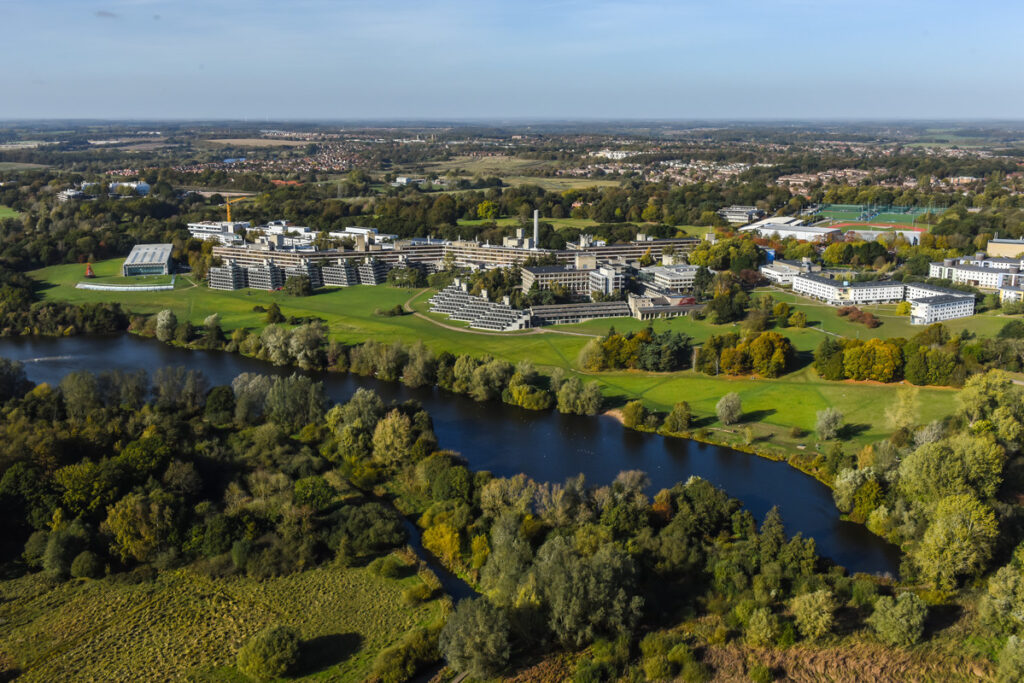
As you amble along UEA’s famous Brutalist concrete walkways, the peaceful view of the campus lake brings to mind what Kazuo Ishiguro said about his time at UEA: “Here I was, faced with an unusual amount of quiet and solitude in which to transform myself into a writer.” Your journey is complete, as you may just have arrived at a new home for your own transformation.
For more information about the University of East Anglia, see our partnership page: UEA MARSHALL SCHOLARSHIPS – Marshall Scholarships. To see the University's recent presentation as part of the 'Marshall Mondays' series of programming, visit our Marshall Monday page here: Marshall Mondays – Marshall Scholarships.